Column · @garrettkqnw601
How a Criminal Defense Lawyer in Lafayette LA Can Protect Your Rights

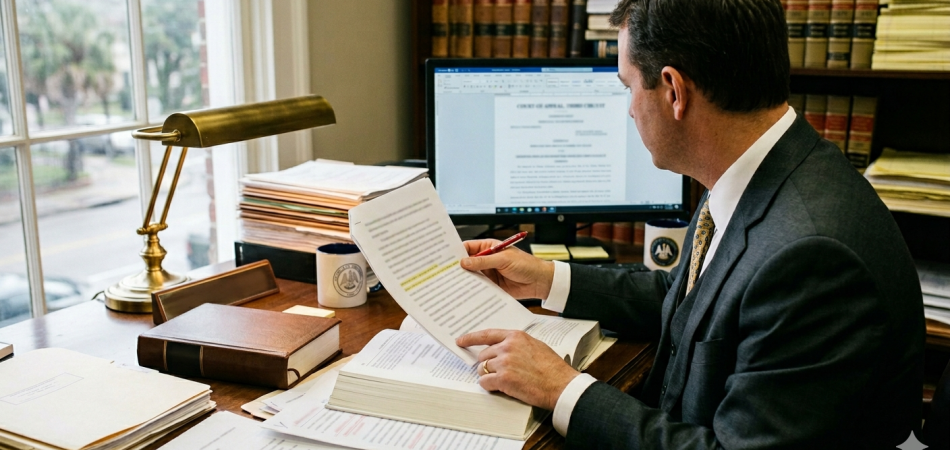
A criminal charge changes the rhythm of daily life almost instantly. One phone call, one traffic stop, one knock at the door, and suddenly the questions pile up faster than the answers. Are you going to jail tonight? Will your employer find out? Should you explain what happened? Is the police officer allowed to search your car, your phone, or your home? What happens at court tomorrow morning?
That first wave of uncertainty is exactly when legal representation matters most. A skilled criminal defense lawyer in Lafayette LA does far more than appear beside you in court. Good defense work begins early, often before formal charges are even filed, and it reaches into every part of the case, from protecting your constitutional rights to controlling how evidence is challenged, negotiated, and presented.
People sometimes assume the defense begins at trial. In practice, many cases are won or significantly improved long before a jury is sworn in. A lawyer who understands local procedure, local judges, local prosecutors, and the practical realities of criminal court in Lafayette can spot opportunities that a person under stress is likely to miss. That can mean suppressing evidence after an unlawful stop, preventing damaging statements from being used, negotiating a reduction that avoids a life-changing conviction, or steering a case toward dismissal when the facts Criminal defense lawyer Lafayette LA do not hold together.
The first hours matter more than most people realize
When someone is arrested or learns that charges may be coming, the instinct to talk is strong. People want to explain, justify, deny, persuade, or clear up what feels like a misunderstanding. That instinct is natural, but it often creates the prosecution’s best evidence.
Police are trained to gather statements. Even remarks that seem harmless can later be described as admissions, inconsistencies, or signs of consciousness of guilt. A person might think, “I was just trying to cooperate.” In the record, that can look very different.
A defense lawyer’s first job is often damage control. That means making sure the client stops giving statements, understands the right to remain silent, and avoids informal conversations that can later be repeated in reports or testimony. It also means preserving facts while memories are fresh. Surveillance footage can be erased. Witnesses move, forget details, or lose interest. Phone data changes. Physical conditions at a scene can be altered within days or even hours.
I have seen cases turn on timing in ways that would surprise most people. A convenience store camera that kept video for only a week. A 911 call log that clarified the timeline. A witness who initially sounded certain but became much less certain when asked to describe lighting conditions, distance, and stress. A fast, deliberate response often creates room to defend a case that would otherwise harden against the accused.
Your rights are not abstract, they shape the entire case
People hear phrases like “constitutional rights” so often that the words can start to feel ceremonial. In a criminal case, they are anything but ceremonial. They determine what the government can do, what evidence it can use, and how far prosecutors can go.
The right to remain silent is one of the best-known protections, but it is only part of the picture. The right to counsel, the right to be free from unreasonable searches and seizures, the right to confront witnesses, and the right to due process all have practical consequences. A defense attorney uses those rights as working tools.
Take searches, for example. A police officer may search under some circumstances and not under others. Whether the stop was lawful, whether consent was truly voluntary, whether there was probable cause, whether a warrant was valid, and whether officers stayed within the proper scope of the search are all issues that can reshape a case. If evidence was obtained unlawfully, a defense lawyer may ask the court to suppress it. Sometimes that leaves the prosecution with a weaker case. Sometimes it leaves no case at all.
The same goes for identification evidence. Eyewitness confidence can be persuasive in court, but confidence and accuracy are not the same thing. Lighting, cross-racial identification issues, stress, weapon focus, alcohol use, distance, and suggestive police procedures can all affect reliability. A seasoned lawyer knows when to press those points and when they may resonate most strongly.
What a local Lafayette defense lawyer brings to the table
Criminal law is statewide, but criminal practice is local. That distinction matters. A criminal defense lawyer in Lafayette LA is not just applying statutes in the abstract. They are working inside a specific courthouse culture, with specific scheduling patterns, charging habits, procedural expectations, and personalities.
That local knowledge should never be confused with favoritism or shortcuts. Courts do not operate on personal favors, and no ethical lawyer should suggest otherwise. What local experience does provide is practical judgment. It helps a lawyer anticipate how a certain issue is likely to be received, what documentation a prosecutor usually wants before discussing resolution, how bond arguments are commonly framed, and which details tend to matter most to a particular court.
A lawyer familiar with Lafayette-area practice can often move more efficiently because they know where friction points tend to arise. If a client is facing a first-offense misdemeanor, the strategy may differ sharply from the approach used in a felony drug case, a domestic violence allegation, a DWI, or a theft matter involving disputed intent. Local courtroom experience helps a lawyer separate what is standard from what is unusual, which can save time, money, and unnecessary risk.
There is also the human side of representation. Clients are often dealing with fear, embarrassment, family pressure, and job concerns while trying to understand a legal process that speaks its own language. A lawyer who regularly handles cases in Lafayette can translate that process into concrete expectations. That alone can reduce costly mistakes.
Investigation is where strong defense work often starts
The government investigates to build a case. The defense investigates to test it. Those are not the same project.
A prosecutor may have a police report, witness statements, photographs, and lab work. That can look complete on paper. But police reports are summaries, not sacred texts. They are written from one perspective, often under time pressure, and they can omit context that matters.
A strong defense investigation may involve reviewing body camera footage frame by frame, comparing dispatch times to officer recollections, inspecting the location where an alleged crime occurred, interviewing witnesses the police did not contact, and examining whether the state can actually prove each element of the charge. In some cases, the issue is not whether something happened, but whether the law classifies it the way the prosecution claims.
Consider a simple example. Two people argue outside a bar. One says it was self-defense. Another says it was an unprovoked attack. The officer arrives after the fact, speaks to a few people, and makes an arrest. By the time the case reaches court, the “facts” may already feel settled. Yet video from across the street could show who advanced first. Medical records might suggest a different sequence of events. Text messages sent minutes after the incident might reveal motive, fear, or intoxication. The difference between a conviction and a dismissal can lie in those overlooked details.
Charges are not convictions, and overcharging is real
Many people assume that if they have been charged, the state must already be able to prove the case. That is not always true. Charges are accusations. They reflect what law enforcement and prosecutors believe they can establish, but they are not findings of guilt.
In some cases, the initial charge is more serious than what the evidence ultimately supports. That can happen because facts are incomplete, emotions were high, or the legal theory is broader than the provable facts. A defense lawyer’s role is to force precision. Can the state prove intent? Can it prove possession? Was the alleged victim’s injury actually caused in the way claimed? Is the timeline consistent? Was the accused identified reliably?
This matters not only at trial, but in negotiation. Prosecutors are more likely to reassess a charge when defense counsel can point to specific weaknesses rather than general complaints. A lawyer who says, “My client is a good person,” is making a plea for mercy. A lawyer who says, “Your witness changed her story twice, the video does not show my client in the room, and the search appears legally defective,” is making a legal argument with leverage.
Bond, release conditions, and protecting your life outside the courtroom
For many clients, the first urgent battle is not trial strategy. It is getting out of jail and stabilizing life. Bond conditions can affect work schedules, travel, childcare, housing, firearms, and contact with family members. In domestic cases, no-contact orders can complicate living arrangements overnight. In drug or alcohol-related matters, testing requirements can create logistical and financial strain. In cases involving alleged violence, electronic monitoring may be on the table.
A criminal Criminal defense lawyer Lafayette LA defense lawyer protects rights here too. The goal is not simply release at any price, but reasonable release conditions that a client can actually follow. An unrealistic bond order creates a pipeline back into custody. Missing a court date, violating a curfew by mistake, or failing to complete a condition because no one explained it properly can make a bad situation worse.
Good counsel helps clients understand what the court’s order really requires. That sounds basic, but it is one of the most overlooked parts of criminal defense. I have seen people stumble not because they were reckless, but because they did not understand that “no contact” can include indirect communication through third parties, or that being late to a screening appointment can trigger a violation report. Clear advice prevents avoidable damage.
Not every case should go to trial, and not every offer should be accepted
One of the hardest parts of criminal defense is judgment. TV teaches people that every strong lawyer wants a dramatic jury trial. Real practice is more measured. Some cases should be tried aggressively. Some should be negotiated carefully. Some need more investigation before either decision makes sense.
A lawyer protects your rights not only by fighting, but by knowing when a fight serves your interests and when it exposes you to unnecessary danger. A plea offer may reduce charges, limit jail exposure, preserve a license, or avoid the uncertainty of trial. On the other hand, a bad deal can saddle a person with a conviction that affects housing, professional licensing, immigration status, gun rights, and future sentencing exposure.
That is why defense advice should never be one-size-fits-all. A college student with no record, a commercial driver, a nurse, a parent in a custody dispute, and a non-citizen can face very different consequences from the same charge. The “best” outcome depends on more than the statutory penalty. It depends on what the case means in the client’s actual life.
A reliable attorney will explain the trade-offs plainly. They will discuss what the state may be able to prove, what defenses appear viable, what a trial could look like, and what the collateral consequences may be. They should not guarantee a result. They should give you informed judgment.
Common moments when rights are most at risk
There are predictable points in a criminal case where people unintentionally harm themselves. These are the moments where counsel tends to matter most:
- during police questioning, when people talk in hopes of ending the encounter
- after a search, when they consent to more than officers are legally entitled to do
- before the first court date, when they rely on rumors instead of legal advice
- during negotiations, when fear pushes them toward a quick but damaging plea
- after release, when they misunderstand bond conditions and create new problems
Each of those moments can affect the entire case trajectory. None of them is rare. Most happen because people are scared, tired, embarrassed, or desperate to get back to normal.
The prosecutor has a job to do, and so does your lawyer
It helps to understand the structure of the system. Prosecutors represent the state. Their role is not to serve as your advisor, explain defenses in your favor, or help you minimize consequences. Even fair and professional prosecutors are tasked with presenting the government’s case.
Your defense lawyer serves a different function. They stand between you and the machinery of prosecution. They test the state’s claims, insist on lawful procedure, push back against assumptions, and make sure your side is not reduced to a paragraph in a report.
That difference becomes especially important when a case looks morally messy. Many criminal cases are not neat stories with one villain and one victim. They involve relationships, intoxication, incomplete memories, self-defense claims, mutual arguments, panic, youth, mental health issues, or bad decisions made in a matter of seconds. The legal system tends to simplify. A strong defense resists oversimplification.
Trial preparation often changes cases even when trial never happens
One of the clearest signs of effective representation is preparation that is visible before trial. Prosecutors can tell when a defense lawyer is ready to litigate motions, cross-examine witnesses, challenge experts, and hold the state to its burden. That preparation often changes negotiation dynamics.
A lawyer who investigates thoroughly, files targeted motions, and develops a credible trial theory is in a better position to obtain meaningful results. By contrast, a lawyer who signals that they are not ready can invite harder bargaining from the other side.
That does not mean aggressive lawyering always looks loud. Some of the best defense work is quiet and methodical. It can involve obtaining records that undermine the timeline, locating a witness no one thought to interview, exposing inconsistencies through measured questioning, or persuading the prosecutor that a weak case should not survive. Skill shows up in discipline as much as drama.
What clients can do to help their own defense
The lawyer leads the legal strategy, but clients still play a critical role. The strongest attorney-client relationships are candid and organized. If you are charged with a crime, your lawyer needs the truth, even the unpleasant parts. Surprises are dangerous in criminal court. Facts that seem embarrassing to you are often manageable when disclosed early and much harder to handle when they surface late.
Clients can usually help most by preserving information and following advice carefully. That includes keeping screenshots, saving messages, identifying witnesses, attending every court setting, and avoiding public commentary about the case. Social media posts continue to be one of the easiest ways to hand the prosecution unnecessary material. Even vague posts can be misread and later recast as intimidation, inconsistency, or lack of remorse.
A practical short checklist looks like this:
- say as little as possible about the facts to anyone except your lawyer
- save documents, photos, messages, and call logs that may matter
- appear on time for every court date and every required appointment
- follow bond conditions exactly, even when they feel inconvenient
- ask questions early if you do not understand an order or legal term
Those habits are not glamorous, but they protect people every day.
A good defense lawyer also thinks beyond the immediate charge
The courtroom result matters, but so does what comes after it. A reduced charge may protect employability. A carefully negotiated resolution may preserve a professional license. In some situations, avoiding a particular offense classification matters more than shaving a few days off a sentence. For younger clients, the long-term value of keeping a record cleaner can be enormous.
This future-oriented thinking is one reason individualized representation matters. Two people charged with the same offense may need very different defense goals. One may prioritize avoiding incarceration at all costs. Another may be willing to risk trial because the immigration consequences of a plea are too severe. Another may need a resolution that does not trigger a probation violation in an older case. Good defense lawyering accounts for the whole picture.
In Louisiana, as in many states, criminal records can continue to affect a person long after the court date is over. Employers, landlords, licensing boards, schools, and insurers may all react to arrests or convictions in different ways. A criminal defense lawyer in Lafayette LA should be thinking not just about the next hearing, but about the client’s life six months, two years, and five years later.
Choosing the right lawyer when the stakes are personal
Not every lawyer is the right fit for every case. Credentials matter, but so do responsiveness, clarity, and judgment under pressure. Criminal defense is intimate work. Clients are often sharing the worst moment of their lives. They need realistic advice, not slogans.
When speaking with a potential attorney, pay attention to how they explain the process. Do they answer directly? Do they distinguish between what they know and what they still need to investigate? Do they talk about risks as well as possibilities? Do they seem prepared to challenge the case, not just process paperwork?
Be wary of anyone who promises a guaranteed outcome. Experienced defense lawyers know better. Criminal cases are shaped by facts, evidence rulings, witness credibility, judicial decisions, and negotiation dynamics that no ethical lawyer can control completely. Confidence is valuable. Certainty is usually a red flag.
What you should expect is commitment, preparation, and honesty. You should expect your rights to be taken seriously from the first contact with law enforcement through every court appearance and strategic decision that follows.
When protection of rights becomes real
The phrase “protect your rights” can sound broad until you watch it happen in a real case. It becomes real when a lawyer stops a client from making a harmful statement. When an unlawful search is challenged. When a rushed accusation is exposed as inconsistent. When an inflated charge is reduced because the facts do not support it. When a bond is made manageable enough for someone to keep a job and care for a family while the case proceeds. When a person is advised not just on what the law says, but on how the system actually works.
That is the value of strong criminal defense. It is not abstract. It is practical, strategic, and deeply personal. For anyone facing investigation, arrest, or prosecution, the difference between going it alone and having a skilled advocate can shape the outcome at every stage. A well-prepared criminal defense lawyer in Lafayette LA does not erase the stress of a criminal case, but they can bring order to chaos, protect essential rights, and create the best possible path forward when the stakes are high.
Ikerd Law Firm
600 Jefferson St Ste 903
Lafayette, LA 70501
(337) 366-8994
FAQ About Criminal defense lawyer Lafayette LA
How much does a criminal lawyer cost in Louisiana?
Fees vary with the charges, complexity, expected work, and attorney's experience. Ask for a written fee agreement explaining the services included, payment schedule, and any separate expenses before hiring counsel. An initial consultation can help clarify the likely scope and cost of representation.
Who is the best criminal defense attorney in Lafayette, LA?
There is no single attorney who is the best fit for every case. Look for a Louisiana-licensed lawyer with experience handling similar charges, clear communication, and a fee arrangement you understand. Discuss the lawyer's approach during a consultation, and be cautious of anyone who guarantees a result.
How to afford a criminal defense lawyer?
Ask prospective attorneys about their fees and whether payment arrangements are available. If you cannot afford representation, ask the court or local public defender's office how to apply for appointed counsel. Eligibility depends on your finances, the case, and applicable requirements; appointment is not automatic.